

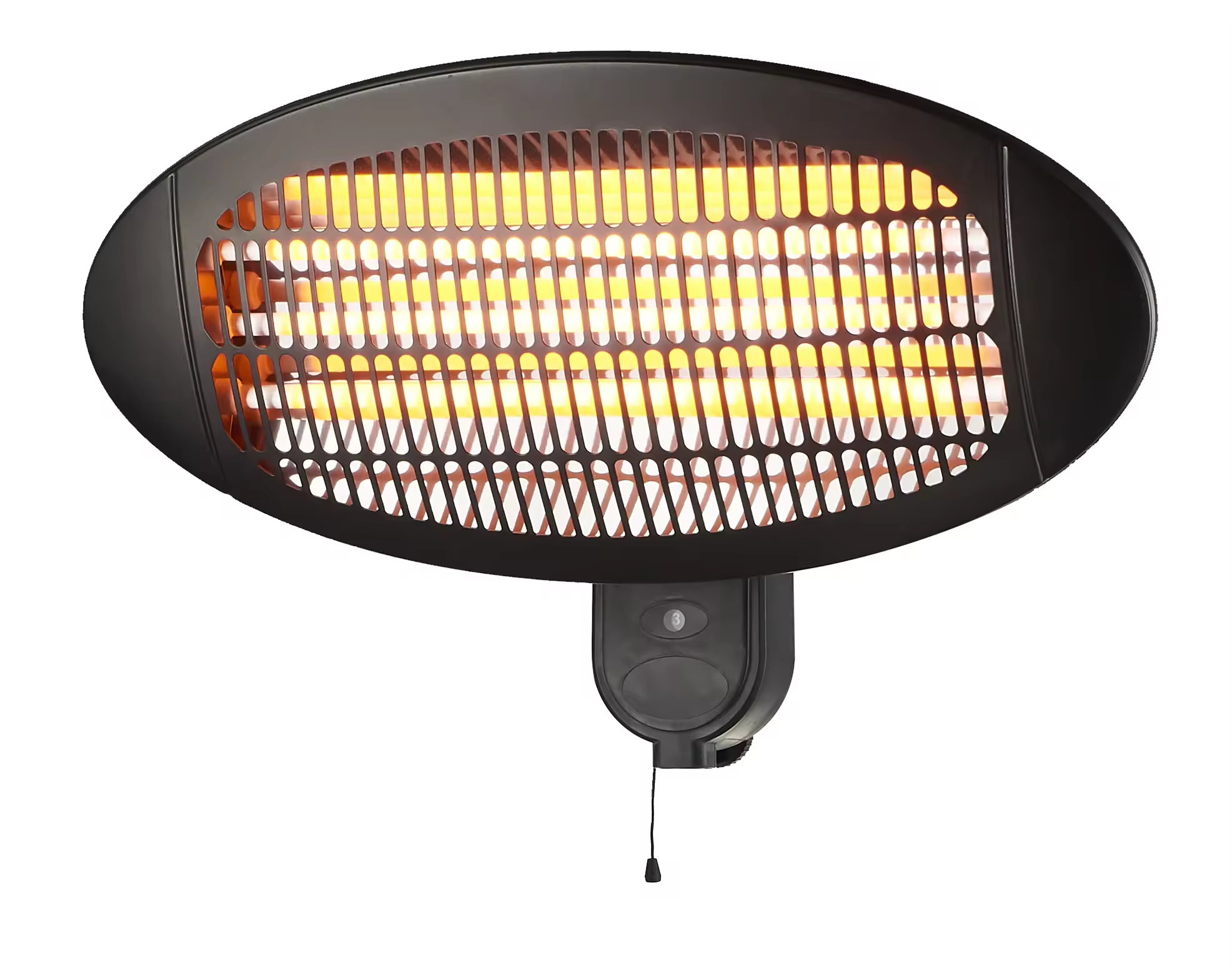
We build bathroom infrared heaters for one simple reason: to keep you safe in a room that’s basically out to get electronics. Because bathrooms are wet, constantly changing temperature, and just plain chaotic. So if a unit can survive that, it can survive anything. That starts withtip-over protection. If the heater gets knocked over, it cuts the power instantly. But that safety only works if the inside stays solid. So we put every single unit through serious damp-heat aging tests.
Here’s what that really means
Bathrooms create their own brutal little weather system. The air is soaked, and the temperature swings wildly. Standard parts give up fast in that environment. So we run our heaters at full power, inside a controlled chamber, in brutal humidity. It’s like cramming years of bathroom abuse into a short test. That way, we catch the weak spots you’d never see in an ordinary lab check. And yes, the tip-over protection is part of that torture. We make sure the sensor and relay still do their job after being baked and drenched.
The parts that take the hit
The heating element has to be tough. We use a quartz envelope because it handles sudden heat shock way better than regular glass. Inside, the filament is supported so it can take vibration—and the jolt of a sudden tip-over—without breaking. The wiring is insulated for high heat and damp conditions. And the tip-over switch? It’s purely mechanical, not software. If the unit tilts, a gravity-driven mechanism physically opens the circuit. No power. No heat. No risk.
What this feels like in real life
If you’re specifying these heaters, the payoff is peace of mind. You get predictable performance, not surprises. That damp-heat testing means the driver board isn’t going to short out after six months. The tip-over mechanism means a clumsy moment won’t turn into a hazard. Yes, building it this way costs more. The materials are sturdier, and the assembly is more involved. But in a bathroom, you can’t cut corners on safety and longevity. We build these to run. And then we test them until they prove they can.