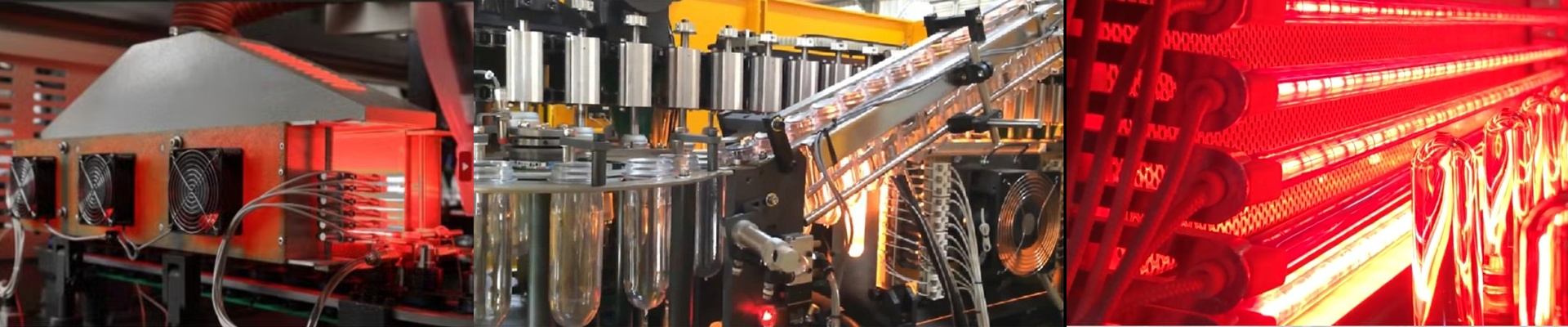
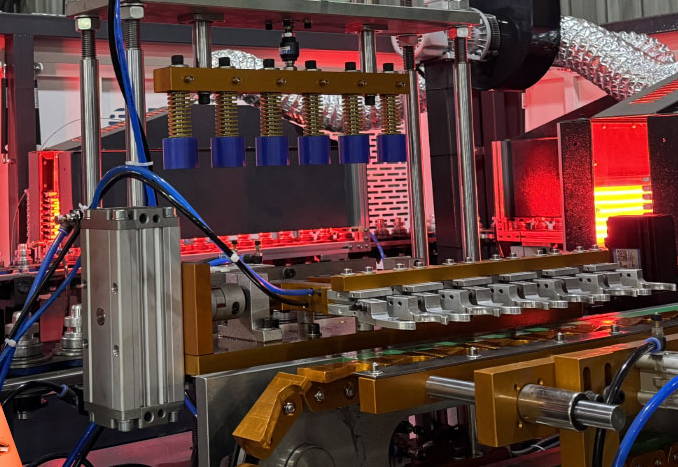
Out on the line, your Sidel or Krones blow molder is the moneymaker. When the heating tunnel starts drifting, you feel it everywhere—cycles drag, stretch gets inconsistent, and bottles start failing down the line. Burn through halogen lamps too fast, or throw in generic emitters that don’t match the OEM’s thermal profile, and a simple swap turns into a production headache you can measure in scrap and downtime. What matters under the hood We spec our infrared heating lamps for PET blowing with short-wave quartz emitters that follow the PET preform’s absorption curve. The details are about fit and stability: 2400W–3600W, 230V/400V, R7s connectors, and lengths matched to the heating zones on Sidel, Krones, SIPA, Husky, SACMI, and Nissei ASB machines. The payoff is predictable temperature control across the preform wall—even heating, no hot spots, no overshoot. Here’s the thing: once you have the right lamp, preform heating becomes repeatable. You can push cycle speed because the emitter hits setpoint fast and holds it, and wall thickness stays consistent from neck to base. Energy use drops too, since short-wave response heats the preform directly, with less wasted heat bleeding into the tunnel. Reliability shows up as fewer lamp changes. These units routinely hit 5,000+ hours with stable output, which means fewer spares on the shelf and less downtime chasing a burnout. A few shop-floor notes Plug-and-play only works when the lamp length, wattage, voltage, and connector match your OEM’s heating section. Keep reflectors and mounting brackets clean and aligned—misalignment causes uneven heating and can shorten lamp life. Make sure the tunnel airflow is doing its job. If the emitter base overheats, terminal degradation accelerates. On a 24/7 line, pencil in a quarterly check on terminal temperature and reflector condition. That’s what keeps performance steady, shift after shift.