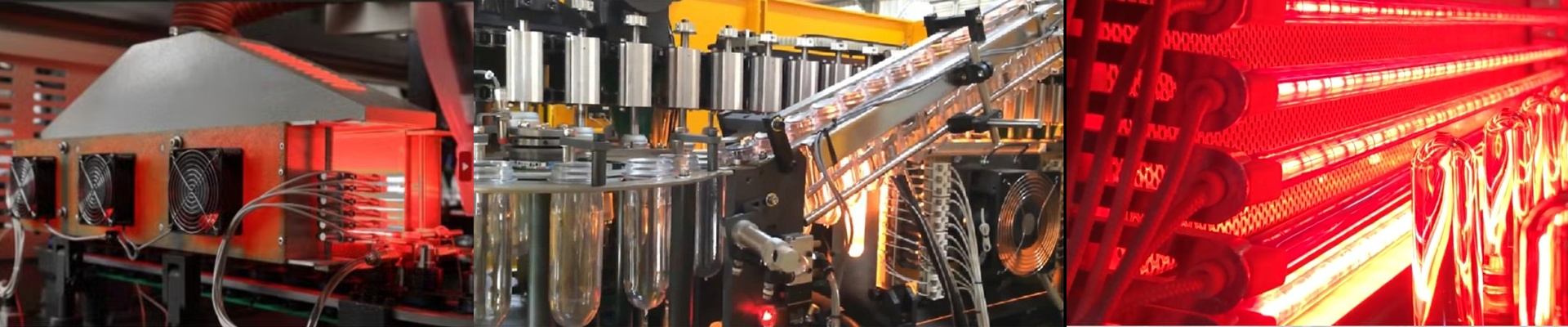
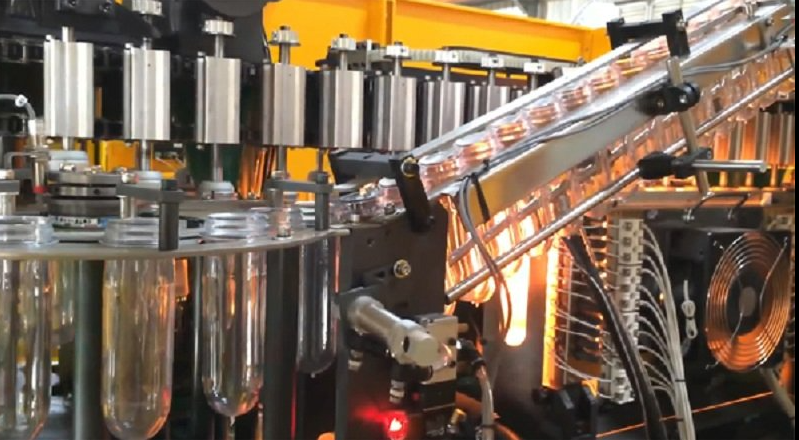
On the blow molding floor, preform temperature drift is the fastest way to bleed yield. You start seeing haze, weak biaxial stretch, and pretty soon the line is throttled back just to chase stable quality. We built our twin-tube white infrared lamp—1200 mm long—to give repeatable heating that keeps the blow molder running at design speed, instead of babysitting it. What matters, technically This is a short-wave infrared emitter, built for PET stretch blow molding. The twin-tube layout concentrates energy into the heating tunnel, and the 1200 mm length matches the standard zone geometry on a lot of machines. We use a high-purity quartz envelope for fast thermal response and stable output, even when the lamp cycles on and off repeatedly. The output is tuned to PET absorption, so the surface heats quickly while the core catches up. That keeps overheating down and scrap off the floor. The R7s base and standard terminal spacing mean you can drop it straight in—no rework on the reflector assembly. Why it works in practice In preform heating, you can trade time for temperature—but only if the lamp stays stable. This one comes up to setpoint fast, holds it with tight variance, and shortens the stabilization window after a restart. The payoff is fewer swings across the preform wall, more consistent bottle weight, and fewer rejects from poor stretch. Energy use per part drops, too, because the emitter hits temperature quickly and spends less time idling. What to watch for Installation is straightforward, but alignment matters. The lamp has to sit centered in the reflector, and the ends need to seat fully in the R7s sockets—otherwise you get arcing. Keep the heating zone clean; a layer of dust on the quartz tube changes output in a hurry. Plan replacement around 5,000 hours of operation, or sooner if output drift starts to bend your heating curve. Match the voltage and kW rating to the socket and zone controller—mismatched specs will kill the lamp early and make heating unpredictable.