


Introduction
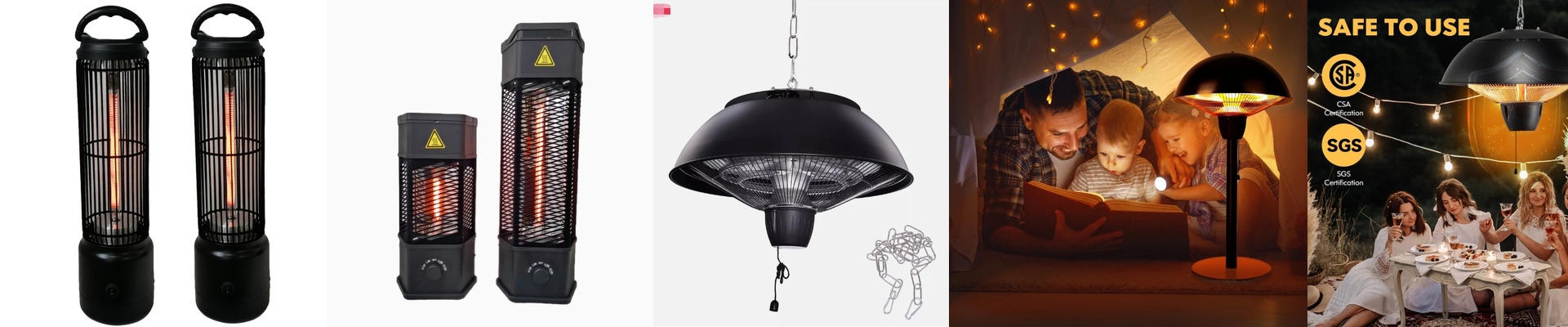
We make infrared heating lamps that don’t quit—especially in wet, demanding places like bathrooms. The whole point is simple: give you focused warmth where you need it, without wasting a single watt. That comes down to choosing the right power and voltage for the size of your room. We build these as direct-wire units, tough enough to handle the daily grind, and designed to keep your energy bills from spiraling.
Power, Voltage, and Fit: Getting It Right
Sizing a heater shouldn’t feel like a guessing game. It’s a clear, practical calculation. A 2500W unit running on 400V is the workhorse for larger bathrooms. For smaller spaces, a 1500W or 2000W unit on 230V hits the sweet spot. The wattage sets how much heat you get, plain and simple. Going with 400V also drops the current on the line. That means you can use thinner wiring, and you get less voltage drop over distance. The 300mm tube focuses the heat into a tight beam, so you’re warming people and surfaces, not the whole empty room.
What’s Inside: The Halogen Edge
At the heart of these heaters is a quartz tube filled with halogen gas. It keeps the filament stable and stops the lamp from darkening over time, so the output stays consistent—hour after hour, for thousands of them. Waterproofing comes from a fully sealed housing and a special coating that blocks moisture from reaching the electrical connections. The R7s connector is a big part of why these feel so solid. It’s a double-ended, straight-pin design that lets you wire it straight in. No flimsy socket to wobble or fail. You wire it, seal it, and it just runs.
Real-World Use: Warmth That Works
In a bathroom, the difference is immediate. Infrared heats objects and surfaces directly, not the air. So you feel warmth faster than you do with convection heaters. But there’s a trade-off. A 2500W unit packs serious heat density, which means the surrounding enclosure and wiring insulation need to be rated for high temperatures. You get fast, targeted warmth, but the installation has to be planned with heat in mind. For engineers, that translates into a drop-in solution that’s easy to specify, dependable in damp conditions, and delivers exactly the energy output the space needs.
The Bottom Line
Choosing a waterproof infrared heater is about making the physics fit the room. Match the wattage, voltage, and sealed design to the space, and you get energy-smart performance you can rely on. And by the way—while we’ve focused on bathrooms here, the same waterproof, infrared approach works across different environments. The details shift, but the core reliability stays the same.